
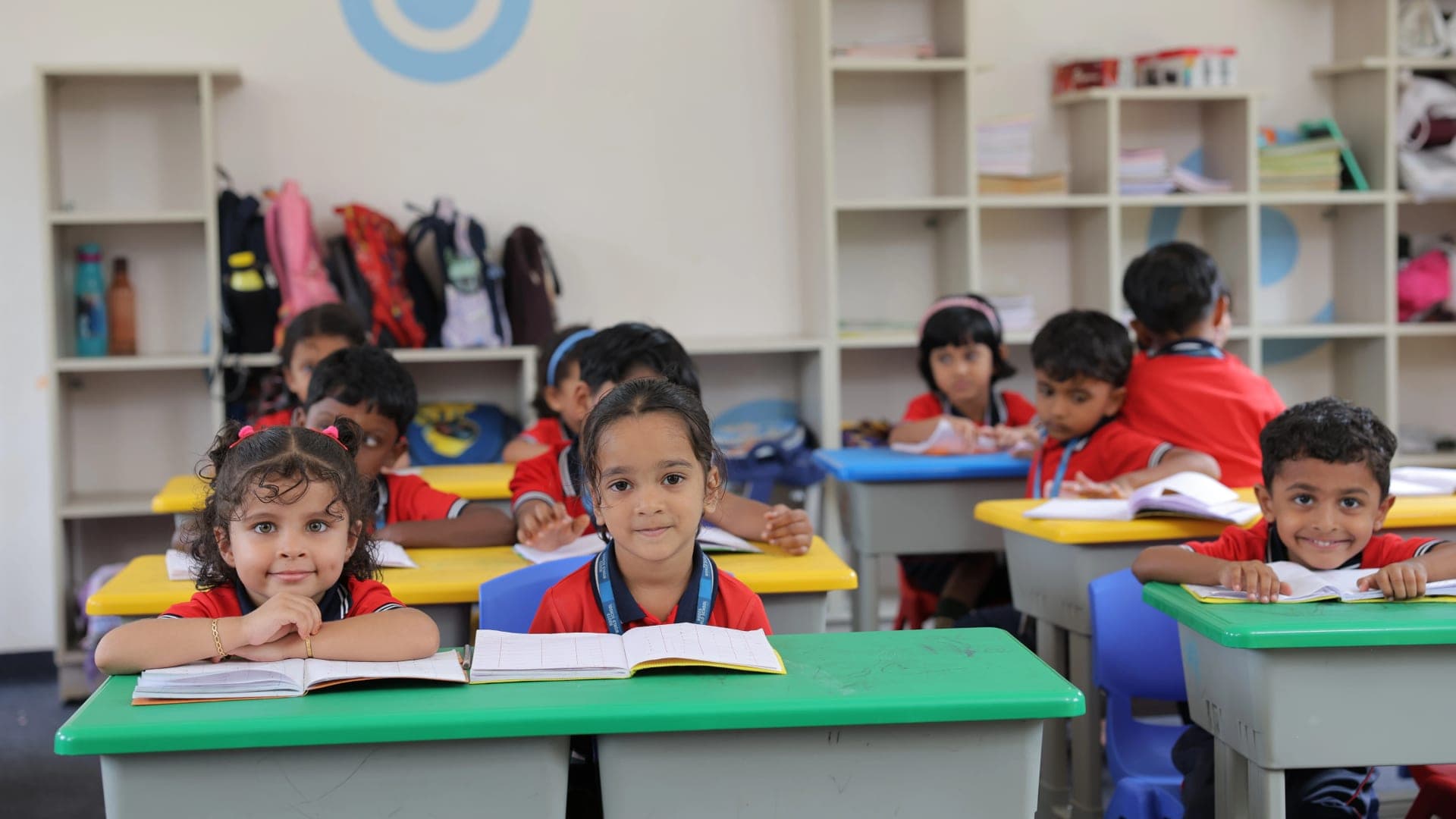
Academics
A Finland-inspired Curriculum
Our Finland-inspired curriculum explained: philosophy, stage-wise structure from Early Years to Senior, subjects, learning support, student life and outcomes.
The model
Curriculum Overview
A Finland-inspired model, thoughtfully adapted for Indian families.
Finland's education system is admired for a simple reason: its children do well and are happy. Its secret is not more hours or more tests; it is trust. Trust in teachers as professionals, trust in children as natural learners, and trust that play, rest and wellbeing are part of learning, not distractions from it.
At Roots, we pair that philosophy with strong academic foundations. Literacy, numeracy, science and languages are taught explicitly and well. Around them, phenomenon-based projects let children apply what they learn to real questions: how does our city get water, why do bees matter, what makes a bridge stand?
Assessment is continuous and low-stress. Teachers observe, give feedback and share progress with families each term. Formal examinations begin only when they are needed for board certification in Senior School.
Four pillars
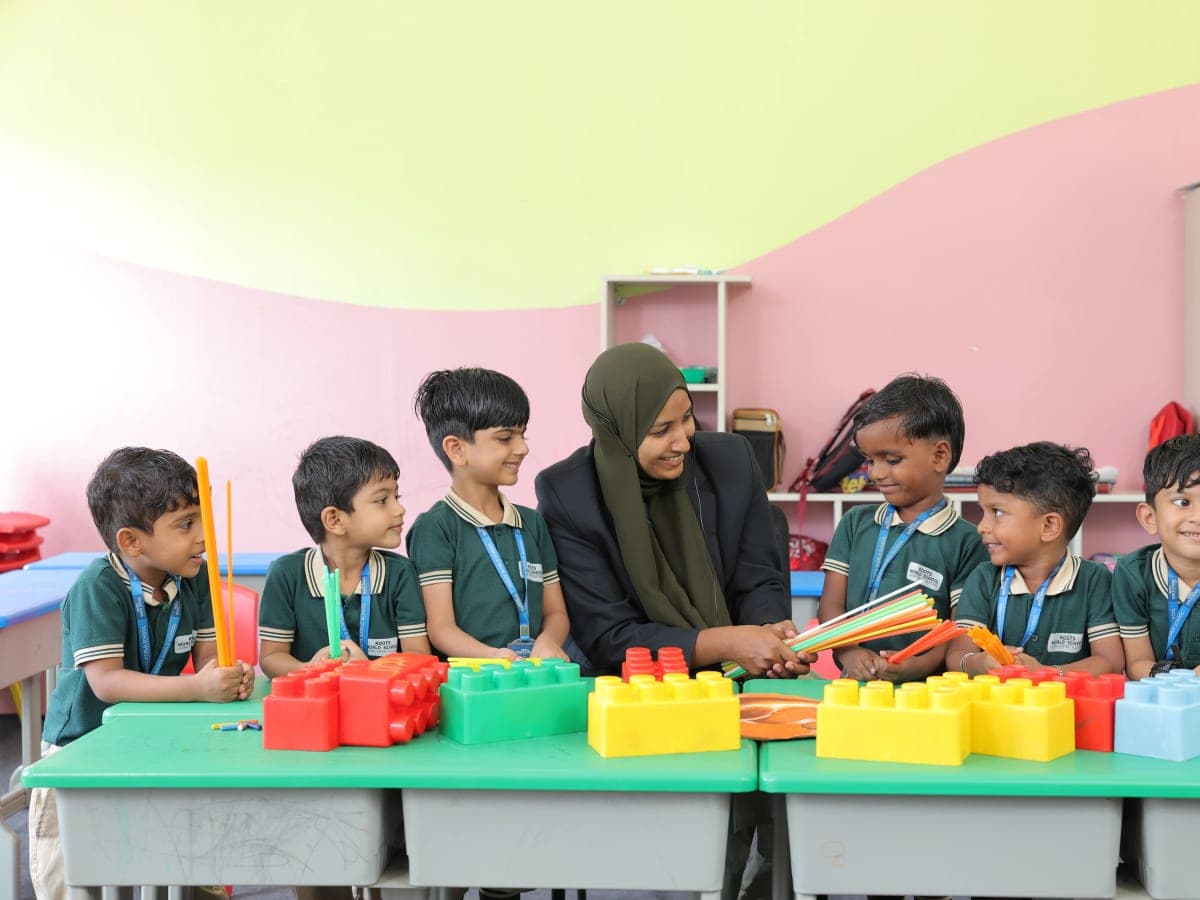
Play & phenomenon-based learning
Themes that cross subjects and make learning meaningful.
Strong foundations
Explicit, well-sequenced teaching of reading, writing and maths.
Wellbeing & balance
Outdoor breaks between lessons and minimal homework in early grades.
Learner agency
Choice in projects and reflection on how, not just what, they learn.
Journey
Stage-wise Structure
Four stages, one continuous journey.
 01Ages 3–6
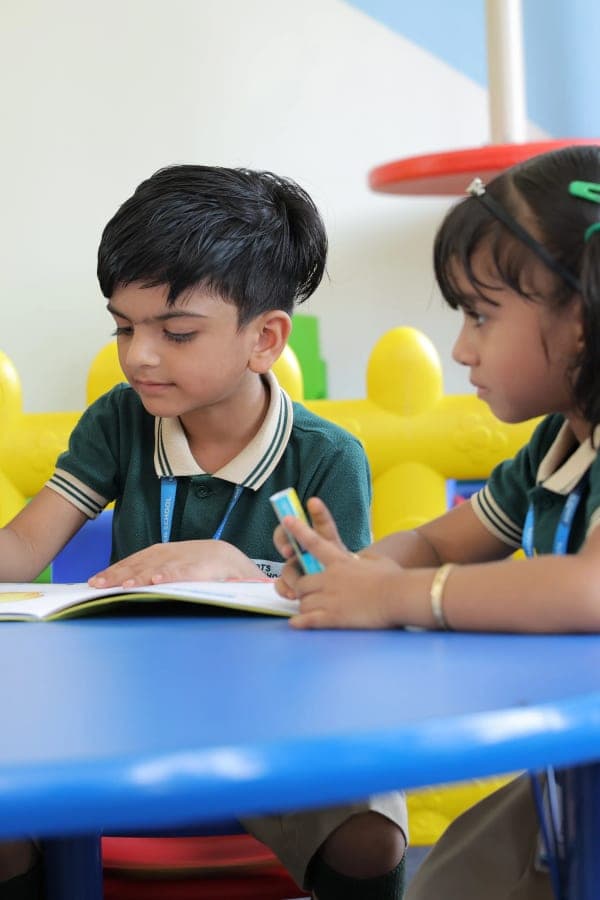
Early Years
Nursery – KG
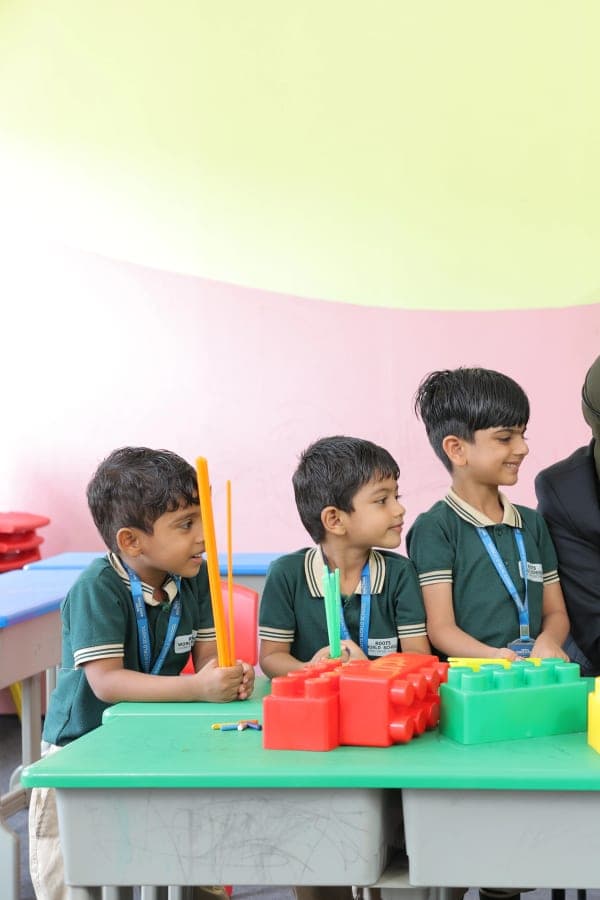
Play is the work. Children build language, number sense, motor skills and friendships through guided play, stories, song and outdoor exploration.
- Oral language and phonics through play
- Early numeracy with hands-on materials
- Self-care, routines and social skills
- Daily outdoor and sensory learning
 02Ages 6–11
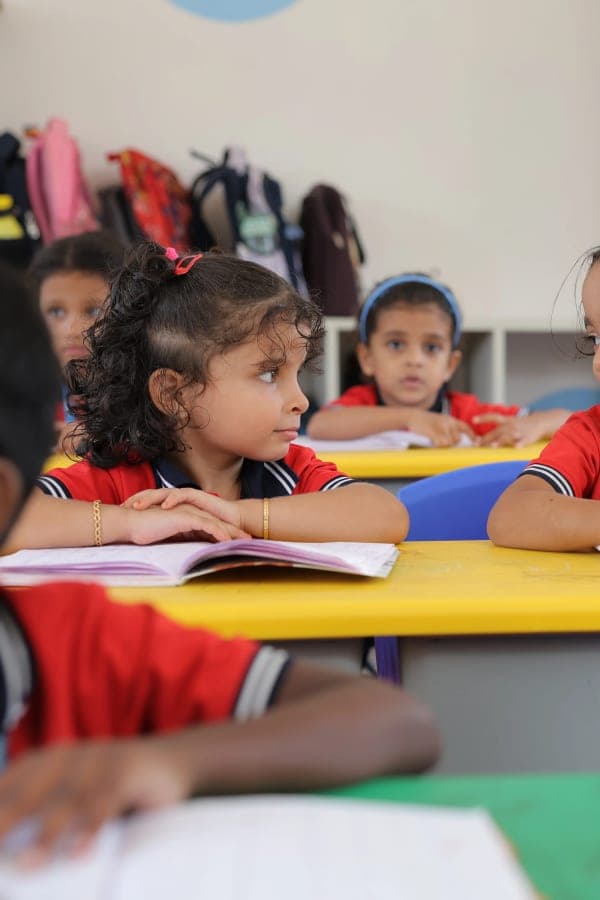
Primary
Grades 1 – 5
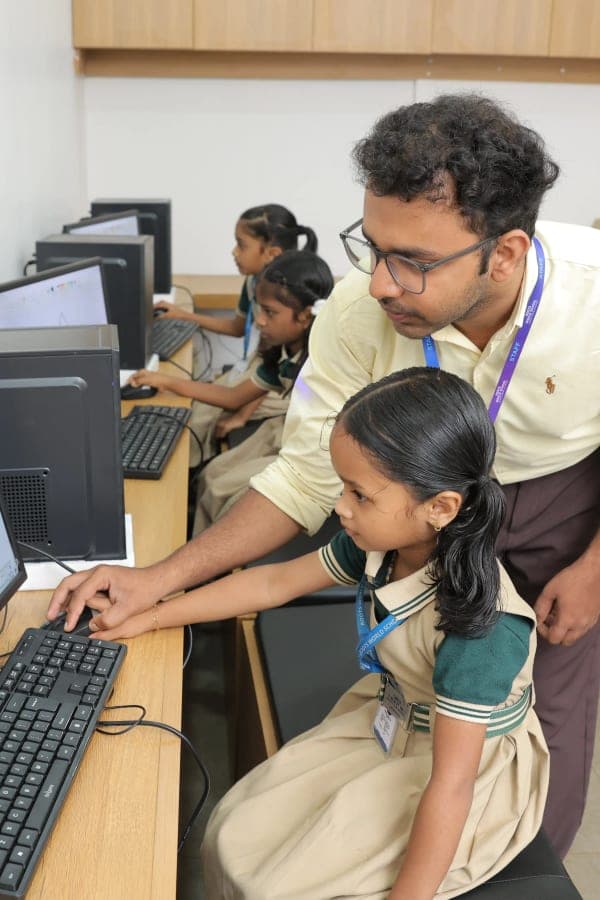
Strong foundations in reading, writing and mathematics, with phenomenon-based projects each term that connect subjects to the real world.
- Structured literacy and reading for pleasure
- Conceptual mathematics
- Termly phenomenon projects
- Second language from Grade 1
 03Ages 11–14
Middle
Grades 6 – 8
Subjects deepen, independence grows. Students run longer inquiry projects, join clubs and competitions, and begin to shape their own learning goals.
- Disciplinary depth in STEM and humanities
- Research, debate and presentation skills
- Design thinking and robotics
- Leadership through clubs and councils
 04Ages 14–18
Senior
Grades 9 – 12
Board-aligned academics with the inquiry habits built over the years. Career guidance, electives and exam preparation that is rigorous without being anxious.
- Board examination preparation
- Elective pathways (Science, Commerce, Humanities)
- University and career counselling
- Capstone research project
Pedagogy
Teaching Philosophy
How we teach matters as much as what we teach.
Play-based learning
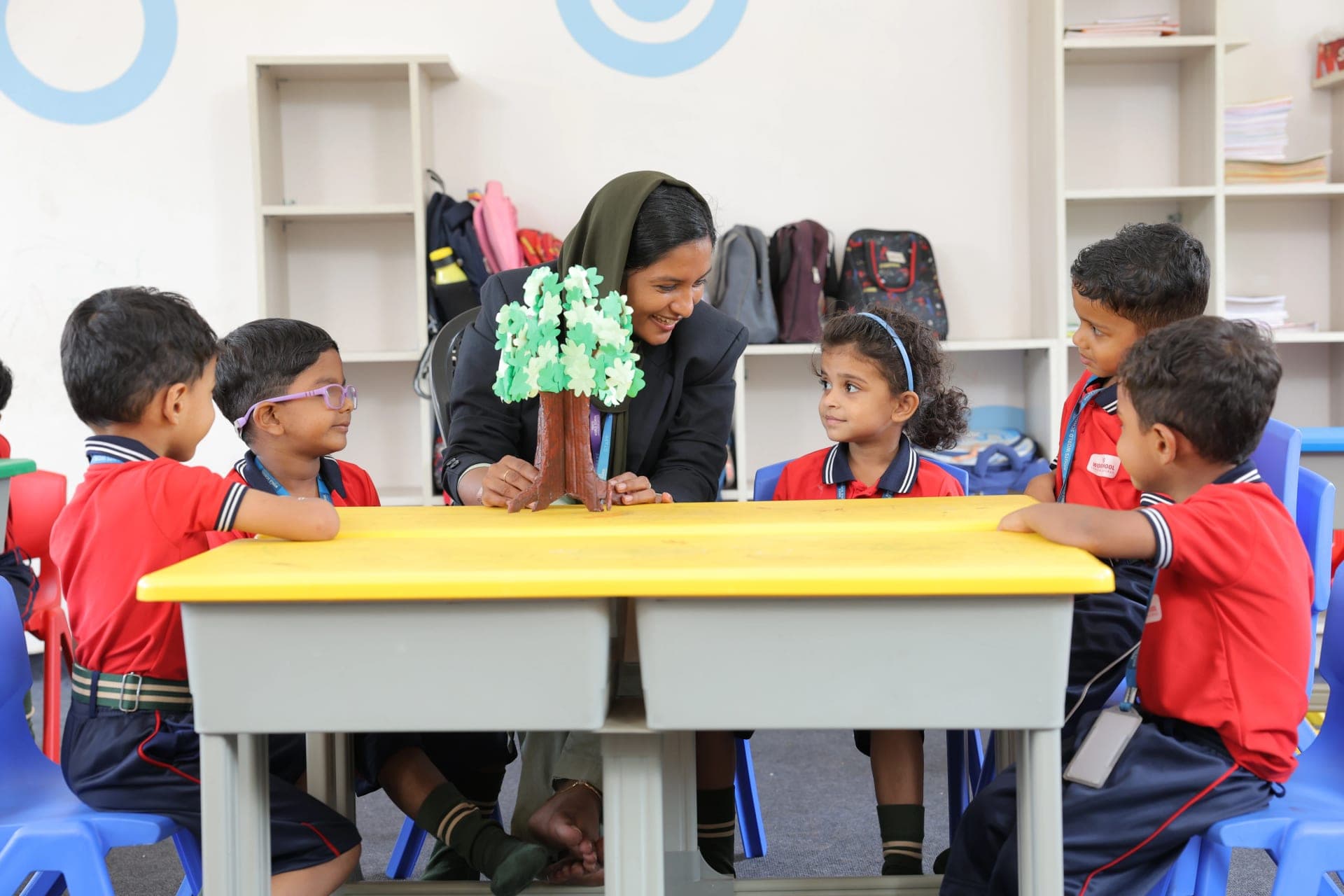
In the early years, play is the most powerful way to learn language, number, empathy and self-control.
Inquiry-based learning
Students investigate real questions, gather evidence and present findings, building thinking skills that transfer.
Low-stress assessment
Continuous, formative feedback replaces high-stakes testing until board years. Progress is shared with families every term.
Teachers as professionals
Our teachers design their own lessons, collaborate weekly and receive ongoing training in Finnish pedagogy.
Outdoors every day
A 15-minute outdoor break between lessons and weekly outdoor learning, whatever the subject.
Minimal homework
Little or no homework in Primary; purposeful, time-boxed practice from Middle School onwards.
What we teach
Subjects by Class
Choose a stage, expand a class and explore its subjects.
Stage → Class → Subjects
Early YearsNursery – KG · 3 classes
Nursery
Nursery subjects
- Language & Literacy
- Numeracy
- Discovery (Science & Social)
- Art & Craft
- Music & Movement
- Physical Development
LKG
LKG subjects
- Language & Literacy
- Numeracy
- Discovery (Science & Social)
- Art & Craft
- Music & Movement
- Physical Development
UKG
UKG subjects
- Language & Literacy
- Numeracy
- Discovery (Science & Social)
- Art & Craft
- Music & Movement
- Physical Development
PrimaryGrades 1 – 5 · 5 classes
Class 1
Class 1 subjects
- English
- Second Language
- Mathematics
- Science
- Social Studies
- Digital Skills
- Art & Craft
- Music
- Physical Education & Wellbeing
- Phenomenon Projects
Class 2
Class 2 subjects
- English
- Second Language
- Mathematics
- Science
- Social Studies
- Digital Skills
- Art & Craft
- Music
- Physical Education & Wellbeing
- Phenomenon Projects
Class 3
Class 3 subjects
- English
- Second Language
- Mathematics
- Science
- Social Studies
- Digital Skills
- Art & Craft
- Music
- Physical Education & Wellbeing
- Phenomenon Projects
Class 4
Class 4 subjects
- English
- Second Language
- Mathematics
- Science
- Social Studies
- Digital Skills
- Art & Craft
- Music
- Physical Education & Wellbeing
- Phenomenon Projects
Class 5
Class 5 subjects
- English
- Second Language
- Mathematics
- Science
- Social Studies
- Digital Skills
- Art & Craft
- Music
- Physical Education & Wellbeing
- Phenomenon Projects
MiddleGrades 6 – 8 · 3 classes
Class 6
Class 6 subjects
- English
- Second and Third Languages
- Mathematics
- Science (Physics, Chemistry, Biology)
- Social Sciences
- Computer Science & Robotics
- Visual & Performing Arts
- Physical Education
- Life Skills
Class 7
Class 7 subjects
- English
- Second and Third Languages
- Mathematics
- Science (Physics, Chemistry, Biology)
- Social Sciences
- Computer Science & Robotics
- Visual & Performing Arts
- Physical Education
- Life Skills
Class 8
Class 8 subjects
- English
- Second and Third Languages
- Mathematics
- Science (Physics, Chemistry, Biology)
- Social Sciences
- Computer Science & Robotics
- Visual & Performing Arts
- Physical Education
- Life Skills
SeniorGrades 9 – 12 · 4 classes
Class 9
Class 9 subjects
- English
- Languages
- Mathematics
- Sciences
- Computer Science
- Commerce and Humanities electives
- Physical Education
- Capstone Research Project
Class 10
Class 10 subjects
- English
- Languages
- Mathematics
- Sciences
- Computer Science
- Commerce and Humanities electives
- Physical Education
- Capstone Research Project
Class 11
Class 11 subjects
- English
- Languages
- Mathematics
- Sciences
- Computer Science
- Commerce and Humanities electives
- Physical Education
- Capstone Research Project
Class 12
Class 12 subjects
- English
- Languages
- Mathematics
- Sciences
- Computer Science
- Commerce and Humanities electives
- Physical Education
- Capstone Research Project
Every learner
Learning Support
Every learner is different. We plan for that from the start.
Special Educational Needs (SEN)
Qualified special educators, individual education plans and classroom accommodations for diagnosed needs.
Individualised support
Small-group and one-to-one interventions in literacy and numeracy, reviewed every six weeks.
Counselling & wellbeing
A full-time school counsellor, peer-buddy programme and structured transitions between stages.
Extension & enrichment
Advanced pathways, Olympiad coaching and mentorship for students who are ready for more.
Beyond the classroom
Student Life
Clubs, sports, arts and competitions, with real outcomes to show for them.
Robotics & Coding Club
Weekly build sessions from Grade 4; competition squad from Grade 6.
1st place, State Robotics Challenge 2026 (Junior)
Sports
Football, basketball, badminton, athletics and yoga, with inter-school fixtures each term.
District U-14 football runners-up, 2025
Visual & Performing Arts
Art studio, theatre and a 40-member choir, culminating in the Annual Day production.
Best Production, Inter-school Theatre Fest 2025
Debate & Model UN
Public speaking from Grade 5; debate and MUN delegations from Grade 7.
Regional English Debate champions, 2024
Eco Club
Runs the campus garden, composting and the student-led plastic-free drive.
Green School Award, 2025
Literary Society
Student magazine, reading challenges and an annual authors' week.
Three students published in a national children's anthology
Key dates
Academic Calendar
Key dates for the 2026–27 academic year. Download the full calendar for term dates, holidays and events.
Download academic calendarPDF, 2026–27Year at a glance
- Term dates
- School events
- Holidays
- Assessments
All events (8)
- Term
8
Monday
Term 1 begins
- Event
15
Saturday
Independence Day celebrations
- Holiday
5–16
Mon – Fri
Autumn break
- Event
14
Saturday
Annual Sports Day
- Holiday
21
to 3 Jan 2027
Winter break
- Term
5
Tuesday
Term 2 begins
- Event
20
Saturday
Annual Day
- Assessment
6–17
Tue – Sat
Year-end assessments
Results
Student Outcomes
Four years of evidence that the approach works.
- Students progressing to the next grade each year
- 100%
- Families re-enrolling for 2026–27
- 96%
- Grade 5 students meeting the national reading benchmark
- 100%
- Competition awards won since 2022
- 40+
- Average reading age 1.5 years above chronological age across Primary (2026 assessment).
- Students placed in national Olympiad merit lists in Mathematics and Science for three consecutive years.
Be part of our journey
Admissions Open for 2027–28
Join a community that inspires, challenges and supports every child.
Enquire Now- Holistic educationMind, body & heart
- Global opportunitiesInternational exposure
- Safe & inclusiveA second home
- Innovation & technologyFuture-ready learning
- SustainabilityCare for our planet